THE MULLAH WHO LOST HIS POPULARITY: HOW MARJANI’S STUDENT FOUNDED A REVOLUTIONARY MADRASA IN KAZAN
IMAM AND PHILANTHROPIST GABDULLA APANAI
PART 1
Recently, "Realnoe Vremya" published an article about a Tatar merchant and philanthropist. It is worth noting that, at the turn of the 19th and 20th centuries, another, even more remarkable imam, politician, and philanthropist with exactly the same first and last name lived in Kazan. In his column for our online publication, historian Radik Salikhov discusses Shigabutdin Marjani’s connections with the Apanaev family, the educational activities of Hazrat Gabdulla, as well as his charitable and political work.
A RENOWNED FAMILY RECORDED BY THE GREAT MARJANI
Gabdulla Apanaev was an outstanding public, political, and religious figure, a talented publicist, and an innovative educator—a man who dreamed throughout his life of freedom for his homeland and nation, yet never lived to see it.
Gabdulla was born on March 15, 1862 (Old Style), in the village of Nizhnyaya Sosna, Malmyzhsky Uyezd, Vyatka Governorate (now Baltasi District, Republic of Tatarstan), into the family of a second-guild merchant who conducted trade in the region. His father, Abdulkarim Iskhakovich Apanaev (1840–1892), resided permanently in Kazan, in the mahalla of the First Cathedral Mosque on Zakharyevskaya Street (now Kayum Nasyri Street). He owned substantial real estate in the city, as well as a network of soap factories and wholesale shops. Let us digress briefly: this branch of the multifaceted Apanaev merchant dynasty produced many successful and progressive entrepreneurs who made significant contributions to Tatar society.
For example, the future imam’s great-grandfather, first-guild merchant and industrialist Yusuf Ismailovich Apanaev (1770–1840), operated a printing house from 1806 to 1809, printing thousands of copies of religious and educational books in the Tatar language. Yusuf’s son and Gabdulla Apanaev’s grandfather, Salih Yusupovich Apanaev, was honored with a special biographical entry in Shigabutdin Marjani’s celebrated historical work Mustafad al-Akhbar....
Describing Salih’s knowledge of mathematics, geography, and astronomy, the eminent scholar Marjani wrote:
“When the stone mosque (the Azimov Mosque) was being built in Pletnevskaya Sloboda, people relied primarily on this man’s advice and calculations to determine the qibla. He had an extensive knowledge of the movements of the Moon and the Sun and could determine the day of any month in the lunar calendar with an accuracy of one hour...”
It is hardly surprising that a family with such rich traditions sought to provide its children with the best possible education.
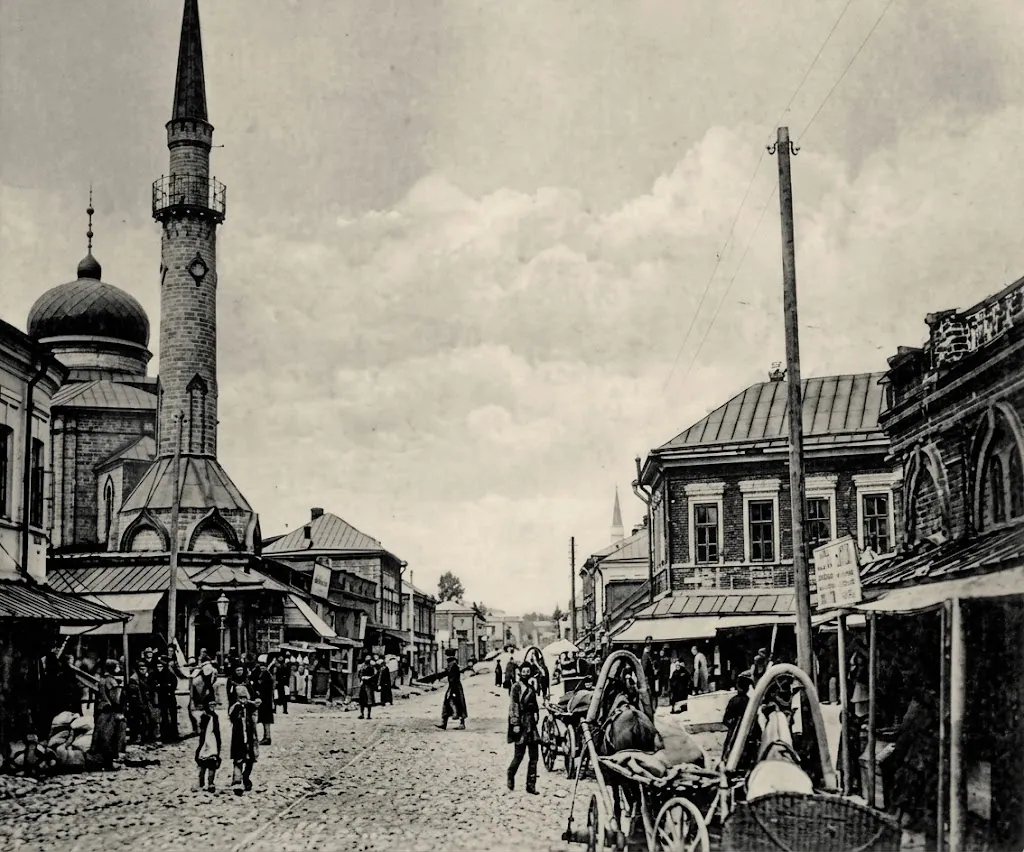
In 1870, young Gabdulla entered the Marjani Madrasa, one of the finest religious educational institutions in the city. He had the good fortune to study under one of the most distinguished scholars and the founder of Tatar historiography, who took an unconventional approach to religious education and included secular subjects in the curriculum: mathematics, astronomy, geography, and history.
The madrasa’s atmosphere of intellectual freedom awakened its shakirds (students) to public life, broadened their horizons, and ensured that their education was not confined to religious subjects alone. Many graduates of the Marjani Madrasa later became prominent figures in the Jadid movement and progressive thinkers of their time.
Thanks to his exceptional abilities, Gabdulla Apanaev became one of Hazrat Shigabutdin’s favorite students. The relationship between the wise mentor and his pupil was sincere and trusting—to such an extent that, shortly before his death, Marjani blessed Gabdulla Apanaev’s marriage to his daughter Bibikhava (1871–1945).
THE DEMOCRATIC EDUCATOR
On December 15, 1890, Gabdulla Apanaev successfully passed his examination before the Orenburg Muslim Spiritual Assembly and was appointed the second mullah at the Yunusov Mosque in the Sennoy Bazaar. There, he began assisting the chief vaiz (preacher), Khusain Muzafarov, in conducting religious ceremonies. Muzafarov had led this mahalla (Muslim parish) continuously since 1871.
In temperament, this imam was in some respects close to G. Apanaev. He, too, had been a student of Shigabutdin Marjani and was known as a sensible scholar who rejected scholastic philosophy and intellectual rigidity. Even within his own family, he was tolerant of influences that traditional standards considered objectionable. His wife, Makhrui Muzafariya, was a renowned poet, educator, and publicist; his daughter Mahmuda was a poet, while his son Mansur later became a famous Tatar composer during the Soviet era.
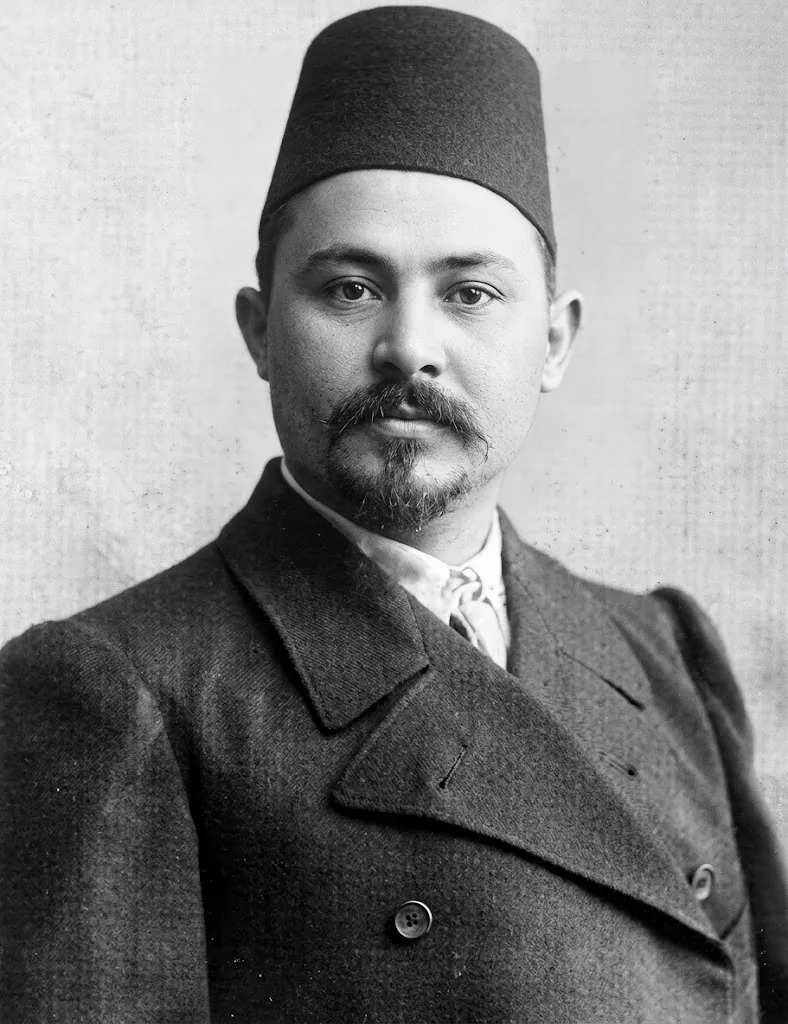
Unfortunately, Hazrat Khusain became involved in an unpleasant incident: whether through negligence or ignorance, he performed a nikah (Islamic marriage ceremony) for an underage girl, an act that fell under the provisions of the Criminal Code. On May 19, 1893, the Kazan Judicial Chamber ruled that Hazrat Khusain should be removed from his position, sentenced to one month in prison, and permanently barred from resuming his duties. Thus, unexpectedly, Gabdulla Apanaev found himself the sole imam-khatib and full religious leader of the Yunusov Mosque congregation.
Seizing this opportunity, Hazrat Gabdulla immediately set about reforming the parish madrasa. He intended to transform it into a modern educational institution where new teaching methods and diverse educational programs would be harmoniously combined with religious and secular subjects. To achieve his goals, he did not hesitate to spend most of the inheritance left to him by his father.
He converted his own house on Evangelistovskaya Street (now Tatarstan Street) into a madrasa, equipping its classrooms with special furniture, teaching materials, books, and educational resources. Although G. Apanaev’s school was relatively small by Kazan standards, with only about 50 shakirds (students), its reputation spread far beyond the governorate. In the history of Kazan, it came to be recognized as one of the pioneering madrasas of the late nineteenth century, alongside the school attached to the Yunusov Orphanage and Galimjan Barudi’s Muhammadiya Madrasa, where innovative teaching methods were employed.
The moderate yet dedicated approach of Apanaev as a mudarris (teacher), together with his exceptional pedagogical talent, attracted young people year after year. These were students who did not wish merely to acquire a solid education but also sought an intellectually stimulating environment in which they could freely express their thoughts and opinions.
At times, truly remarkable things happened. For example, Ahmadkhadi Maksudi, a renowned Arabic-language teacher at the Galyamiya and Kasimiya madrasas, transferred to Apanaev’s newly opened school. Both institutions were administered by the historic and highly respected Second Cathedral Mosque. Maksudi was the author of some of the earliest innovative Tatar-language textbooks and the editor of the famous Tatar newspaper Yoldyz (The Star).
He not only left his highly paid position but also brought with him his most successful students, among whom was the aspiring writer Ayaz Ishaki. Around the same time, the renowned Tatar poet Naki Dumavi also studied there and later recalled his time at the madrasa with the greatest warmth.
AN INNOVATIVE PHILANTHROPIST
Of course, Gabdulla Apanaev’s activities could not go unnoticed by the provincial administration. As the authorities sensed growing unrest among the city’s Muslims, they began closely monitoring the leaders of the Muslim community. The local bureaucracy, which generally struggled to accept anything new, viewed with irritation the innovative and therefore suspicious activities of certain mullahs involved in public organizations. Gradually, it began implementing every possible “preventive measure” to curb the influence of “unreliable” individuals. However, all attempts to find grounds for disciplinary action ultimately served only to strengthen G. Apanaev’s standing among Muslims. Many now regarded him as a serious and highly promising public figure.
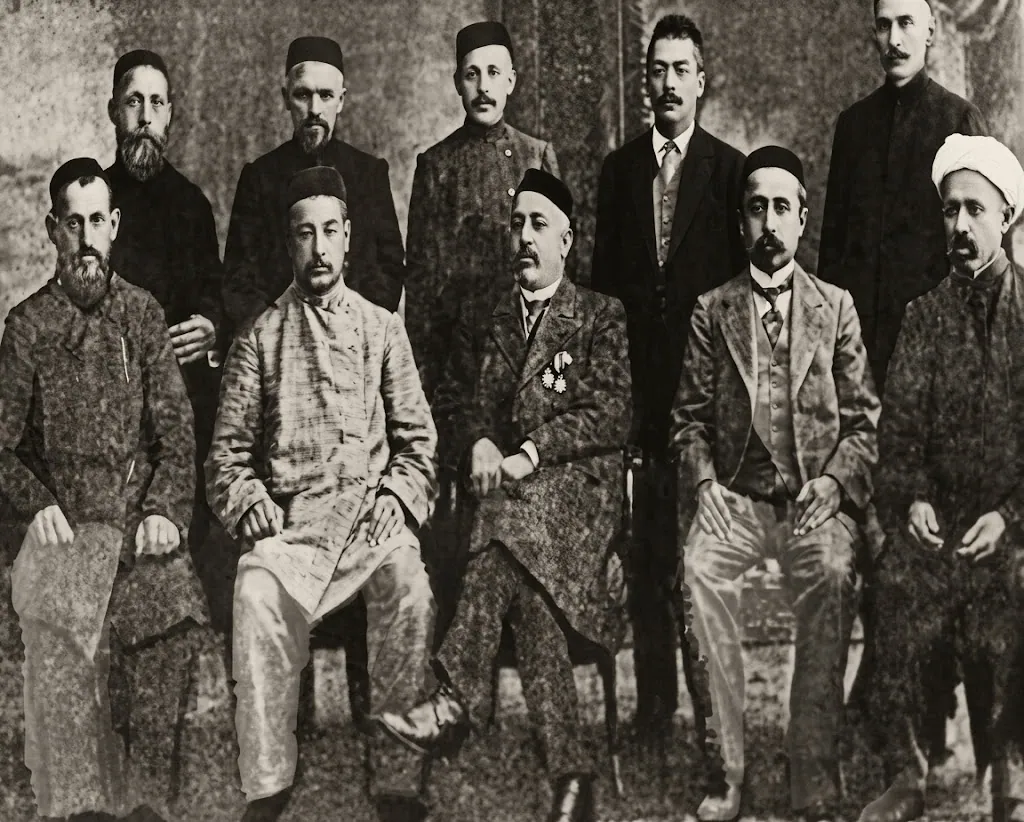
G. Apanaev’s first successful test of his abilities in this sphere came when he took charge of the Muslim Charitable Society. It was a major Tatar public organization, founded by Kazan merchants in 1898, officially registered with the state, and possessing substantial financial resources. Between 1902 and 1906, while serving as chairman of the society’s board, G. Apanaev introduced significant changes to its activities. Under his leadership, donations began to be collected at charity evenings, theatrical performances, recreational excursions, and national celebrations, bringing broad segments of society into charitable work.
In this field, too, Mullah Gabdulla proved himself a bold reformer, ensuring that the zakat paid by Kazan’s Muslims was used for the benefit of the wider community. For example, according to widespread interpretations based on the works of conservative Islamic jurists (fuqaha), zakat was to be given exclusively to specific individuals, while directing it to a public organization or the entire community was considered impermissible. Without engaging in exhausting disputes with conservatives, G. Apanaev managed to convince wealthy and respected merchants that his position was correct.
As a result, zakat contributions became the organization’s largest source of income, surpassing even membership fees. These funds enabled the Muslim Charitable Society, in 1904, to open an orphanage accommodating 80 children and providing vocational training, in addition to the existing almshouse and dispensary.
The preacher’s contributions were eventually recognized. At one of the board meetings, he was elected an honorary member of the society.
“A LIBERAL MULLAH WHO DEFENDED THE INTERESTS OF BEYS AND CAPITALISTS”
G. Apanaev’s finest hour truly came during the First Russian Revolution. It was then that his organizational abilities, political skills, and talent as a publicist and leader of the empire’s national movements fully came to the fore. He is rightly regarded as one of the founders of the first Muslim political party, Ittifaq al-Muslimin (the Union of Muslims).A brilliant orator with a lively and fiery temperament, G. Apanaev was also capable of measured, logical reasoning and understood complex political issues. He eagerly studied the history and characteristics of political parties and movements both in Russia and abroad. Naturally, he directly participated in developing the Union of Muslims’ programmatic documents alongside S. Alkin, S. Maksudi, Y. Akchura, G. Barudi, and A. Topchibashev. Hazrat Gabdulla organized and held all three congresses of the organization and was elected to its Central Committee and Kazan branch on several occasions. Yet his greatest political contribution was not so much his outstanding organizational ability as his exceptional diplomatic skill and capacity to find compromises in the most difficult circumstances.G. Apanaev’s views on the social order of his time and his political convictions have never been clearly defined. During the Soviet era, he was given a simple but blunt description: “a liberal mullah who defended the interests of beys and capitalists.” In reality, the picture was much more complex. In his convictions, G. Apanaev did indeed belong to that part of the national intelligentsia which, rejecting revolutionary tactics and strategies, sought to secure the economic, spiritual, educational, and cultural rights of non-Russian peoples through constitutional and democratic means. Hazrat Gabdulla also tried to find common ground with those who embraced socialist ideas, most of whom were young people. At the same time, he sought to play a distinctive mediating role between radicals such as Ayaz Ishaki and Fuat Tukhtarov and more law-abiding Muslim leaders such as Galimjan Barudi, Sadri Maksudi, and others.The friendship between Mullah Gabdulla and Ayaz Ishaki may have begun at the Apanaev Madrasa and continued after Ishaki entered the Tatar Teachers’ School. There, Ayaz Ishaki formed a group of revolutionary-democratic young people that had a considerable influence on students at Kazan’s madrasas. Their friendship was particularly evident in the story of G. Apanaev’s founding of the newspaper Azat. The publication first appeared on February 1, 1906. Even the editorial in its inaugural issue made the newspaper’s mission clear:“Remaining true to its name, the newspaper will fight for freedom and prosperity. It will never remain indifferent to oppression, injustice, humiliation, or the backwardness of the people, and it will strive to secure equal rights for all nations.”
Radik Salikhov.
Texts under the photographs:
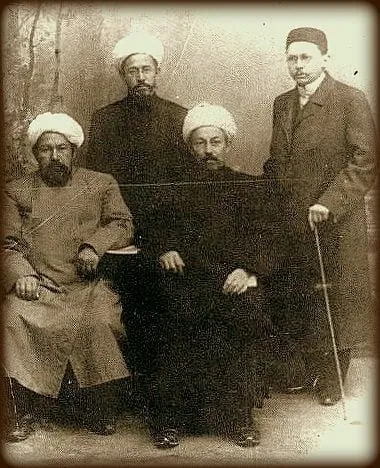
A. From left to right: Gabdulla Apanaev, Salikhjan Galiev, Galimjan Barudi, and Abdulhamit Kazakov. Vologda, 1908.
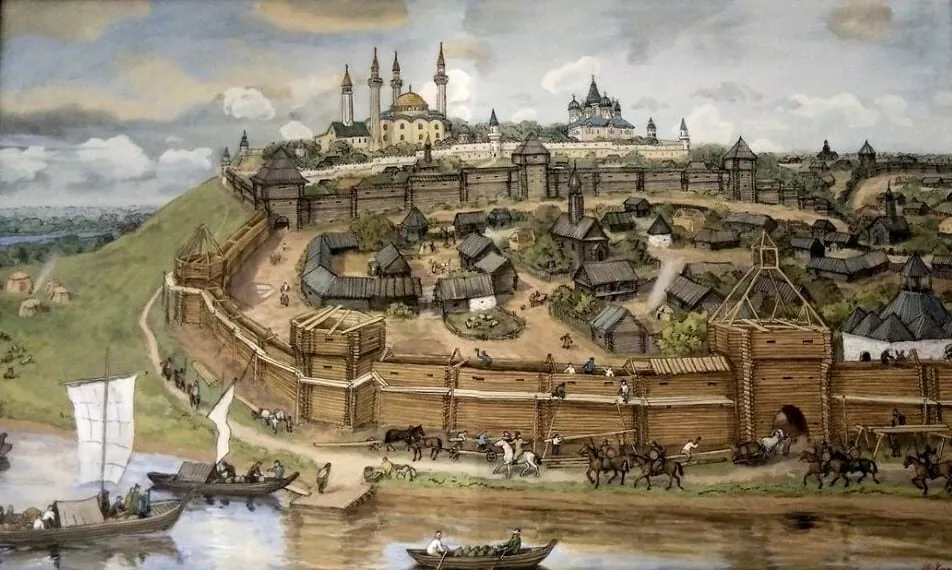
B. In 1870, young Gabdulla began attending classes at the Marjani Madrasa, one of the finest religious educational institutions in the city.
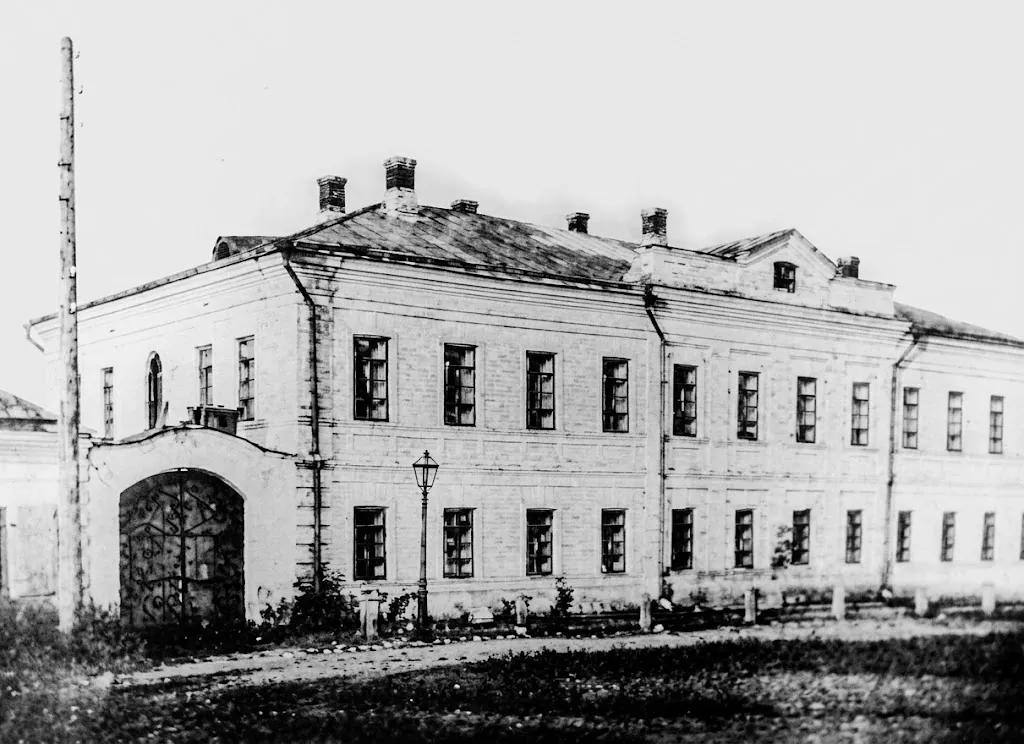
C. Thus, Gabdulla Apanaev himself became the sole imam-khatib and fully empowered religious administrator of the Yunusov Mosque congregation.
D. For example, Ahmadkhadi Maksudi, a renowned Arabic-language teacher at the Galyamiya and Kasimiya madrasas attached to the historic and highly respected Second Cathedral Mosque, took charge of Apanaev’s newly opened school. He was the author of some of the earliest innovative Tatar-language textbooks and editor of the famous Tatar newspaper Yoldyz (The Star).
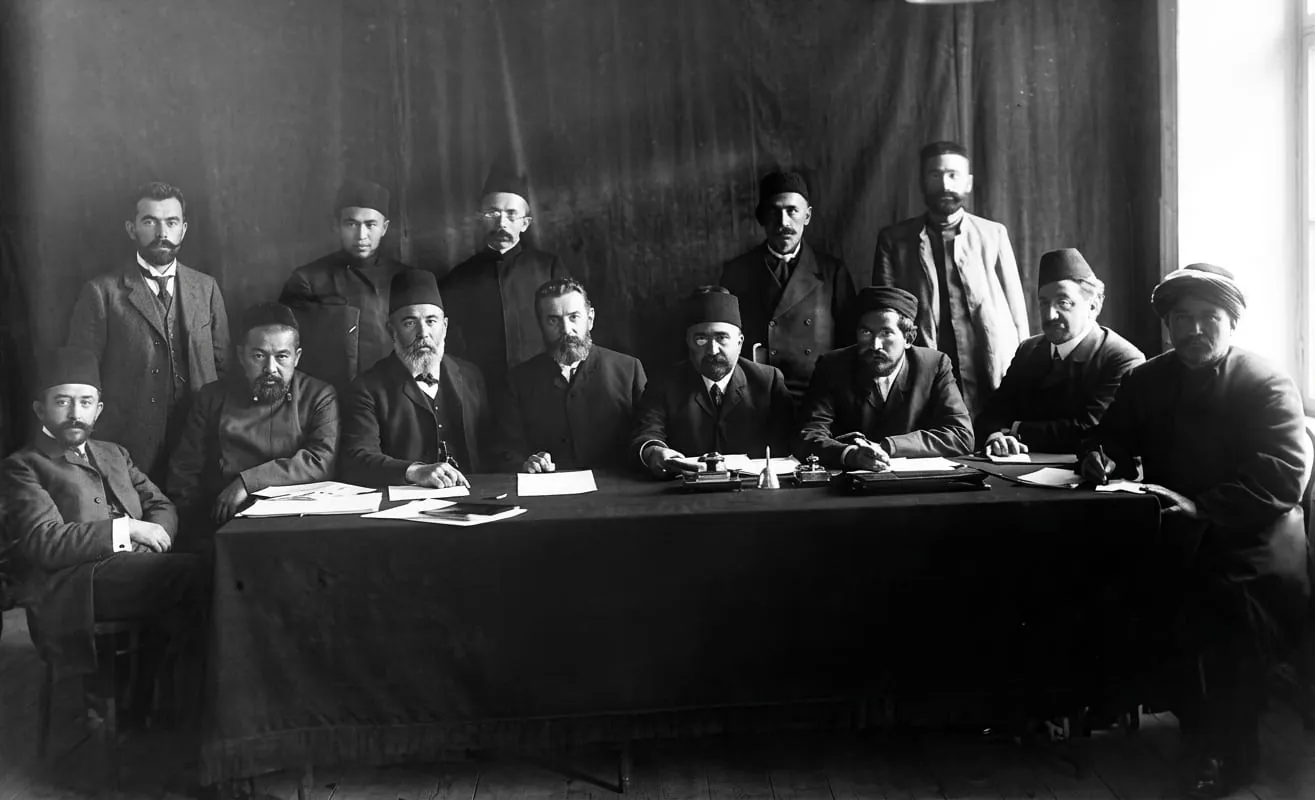
E. Members of the board of the Kazan Muslim Charitable Society.
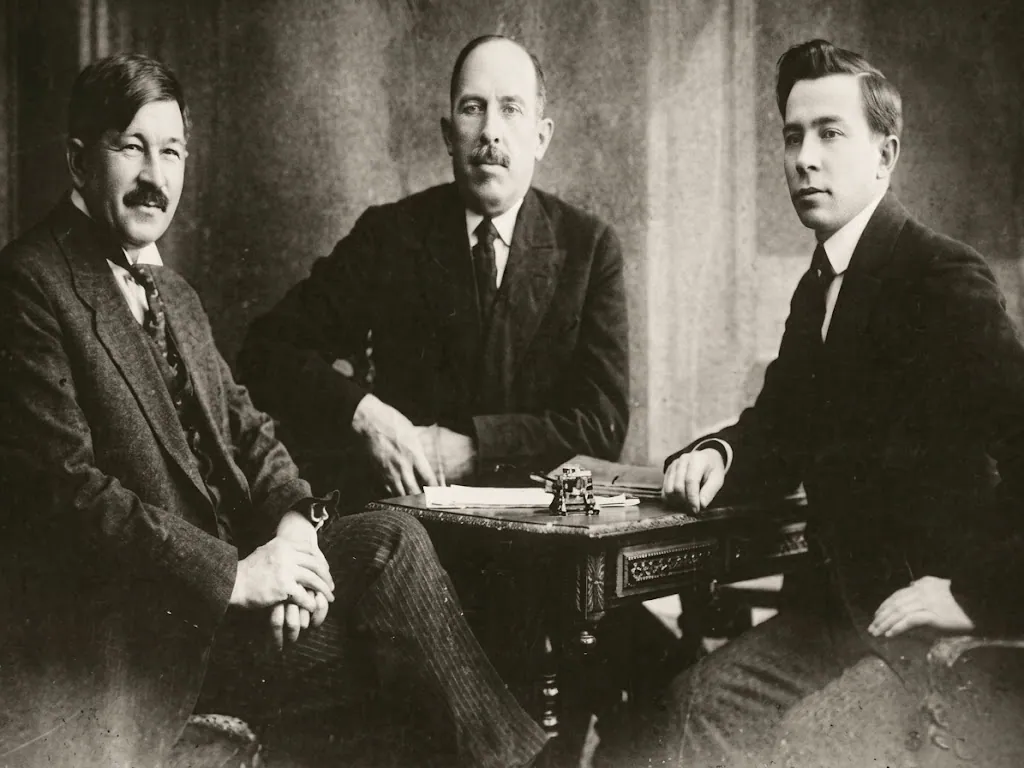
F. Gayaz Ishaki, Sadri Maksudi, and Fuat Tukhtarov.